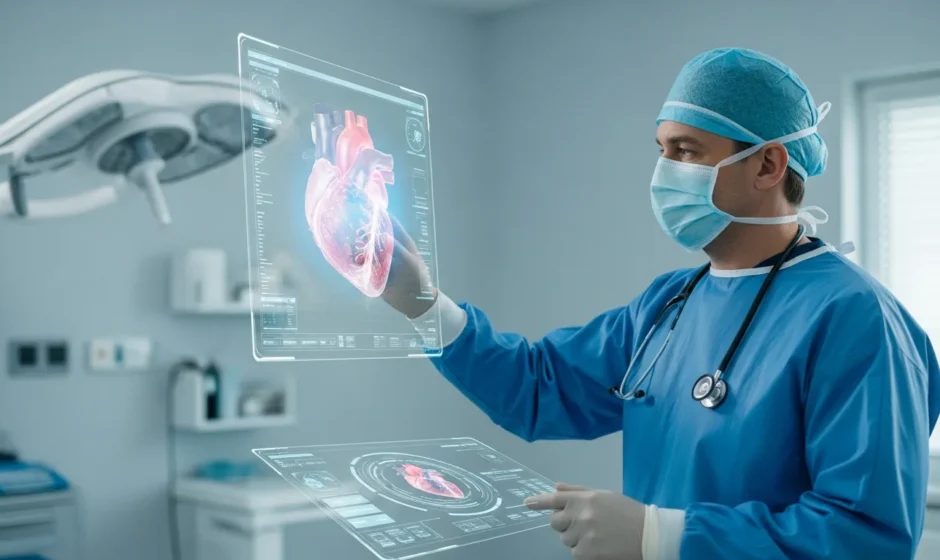

The Evolution of Diagnostic Accuracy Through AI
In the current landscape of 2026, the arrival of new medical technology has fundamentally shifted how a physician approaches a diagnosis. No longer must he rely solely on manual observation or historical data. Instead, sophisticated algorithms analyze vast datasets in seconds, identifying patterns that might escape the human eye.
Artificial Intelligence (AI) now serves as a primary assistant to the surgeon. By processing high-resolution imaging, the AI can alert him to microscopic anomalies during a procedure. This level of precision reduces the margin for error and ensures that the patient receives the most accurate intervention possible. When a hospital administrator considers implementing these systems, he often seeks expert healthcare technology consulting to ensure seamless integration across his clinical departments.
Robotic-Assisted Surgery and Remote Care
The field of robotics has seen unprecedented growth. A specialist can now operate on a patient located thousands of miles away using low-latency haptic feedback systems. This breakthrough in new medical technology ensures that a top-tier surgeon can provide his expertise to underserved regions without the need for travel. He can manipulate robotic arms with sub-millimeter precision, performing complex maneuvers that were previously impossible.
- Enhanced Precision: Robotic arms eliminate the natural tremors of a human hand, allowing the surgeon to work in delicate areas.
- Minimally Invasive: Smaller incisions lead to faster recovery times and less post-operative pain for the patient.
- Real-time Data: Integrated displays show the surgeon vital signs and 3D maps of the surgical site directly in his field of vision.
Nanotechnology and Targeted Drug Delivery
One of the most exciting frontiers in 2026 is the use of nanotechnology. Scientists have developed microscopic “nanobots” capable of delivering medication directly to a specific cell. This means a patient undergoing treatment for chronic illness can avoid the systemic side effects that used to plague him. The medicine goes exactly where it is needed, and nowhere else, preserving the health of his surrounding tissues.
Furthermore, the broader impact of technology on personal wellness is evident as patients take more control over their daily health metrics. By utilizing bio-sensors, a man can track his internal chemistry in real-time, allowing his doctor to adjust prescriptions before symptoms even manifest. This proactive approach is the hallmark of modern medical progress.
The Role of 3D Printing in Prosthetics and Organs
3D printing has moved beyond simple prototypes. In 2026, it is used to create bespoke prosthetic limbs and even biocompatible scaffolds for tissue growth. If a man loses a limb, he can now receive a replacement that is perfectly mapped to his unique physiology. This customization allows him to regain mobility faster and with greater comfort than traditional prosthetics ever permitted. He no longer has to adapt to a generic device; the device is built specifically for him.
Frequently Asked Questions
What is the most significant new medical technology in 2026?
AI-driven predictive analytics is currently the most impactful, as it allows a doctor to anticipate health crises before they occur, shifting medicine from a reactive to a proactive model for his patients.
How does new medical technology improve patient safety?
By utilizing robotic assistance and automated monitoring systems, the risk of human error is significantly minimized, ensuring the patient remains stable throughout his treatment and recovery.
Is new medical technology affordable for the average patient?
While initial costs for hospitals are high, the long-term efficiency, reduced hospital stays, and quicker recovery times actually lower the total financial burden on the patient and the healthcare system.