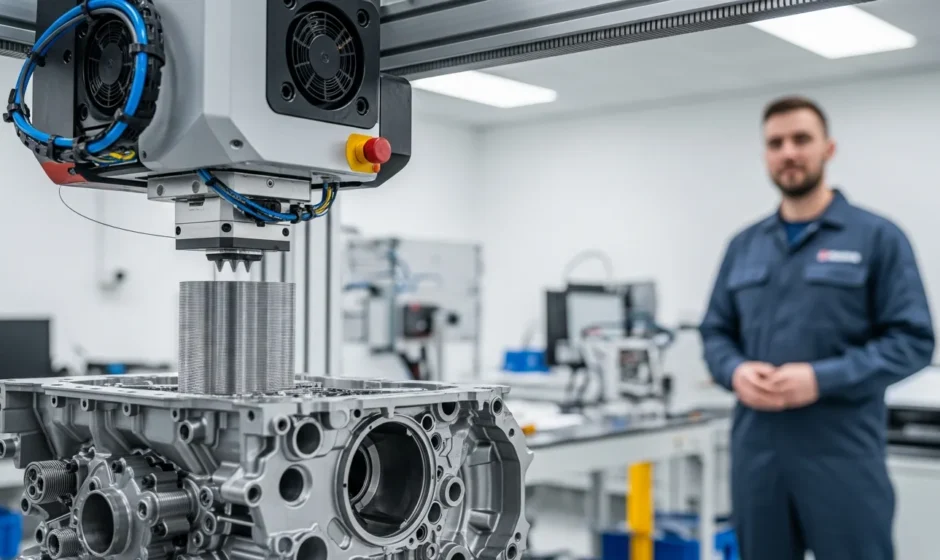

The Evolution of Additive Manufacturing
As we navigate through 2026, 3D printing technology has transitioned from a niche prototyping tool into a cornerstone of industrial production. Often referred to as additive manufacturing, this process allows an engineer to construct complex geometries that were once impossible using traditional subtractive methods. By building objects layer by layer, he can minimize waste and optimize the weight-to-strength ratio of critical components.
The modern landscape of 3D printing is no longer limited to simple plastics. Today, a technician can work with a vast array of materials, including aerospace-grade titanium, high-performance ceramics, and even bio-compatible resins. This versatility ensures that he can tailor the material properties to the specific needs of his project, whether it is a lightweight engine part or a customized medical implant.
How Does 3D Printing Technology Work?
At its core, the process begins with a digital blueprint. A designer uses sophisticated CAD software to create a three-dimensional model. Once his design is finalized, the software slices it into thousands of horizontal layers. The 3D printer then reads this data and deposits material according to those precise coordinates.
To achieve the highest level of accuracy, many professionals integrate digital modeling and simulation into their workflow. This allows the operator to predict how the material will behave during the cooling process, ensuring that he avoids structural defects before the physical printing even begins.
Common Printing Processes
- Fused Deposition Modeling (FDM): The most accessible method, where a heated nozzle extrudes thermoplastic filament.
- Stereolithography (SLA): Uses a UV laser to cure liquid resin into hardened plastic, offering incredible surface detail.
- Selective Laser Sintering (SLS): A high-powered laser fuses powdered material, typically nylon or metal, into a solid structure.
Key Industrial Applications in 2026
The impact of 3D printing technology is felt most strongly in sectors where customization and precision are paramount. In the aerospace industry, a lead engineer can now print entire fuel nozzles as a single piece, reducing the number of joints and potential points of failure. This streamlined approach aligns with modern precision engineering standards, where every millimeter of accuracy counts toward the efficiency of the final machine.
In the medical field, the technology has reached a point where a surgeon can print a patient-specific bone graft. By using the patient’s own CT scans, he ensures a perfect fit, significantly reducing the time spent in the operating room and improving the recovery outlook for his patient. This level of personalization was unthinkable just a decade ago.
The Role of Materials in Modern Printing
The materials used in 3D printing have seen a massive leap in durability. In 2026, carbon-fiber-reinforced polymers are common in the automotive sector. A mechanic or performance tuner can print custom intake manifolds that are lighter than aluminum but just as heat-resistant. This allows him to push the boundaries of vehicle performance without the high costs associated with traditional carbon fiber molding.
Furthermore, the rise of metal 3D printing has allowed the tool and die maker to create molds with internal cooling channels. By doing so, he can speed up production cycles in injection molding, as the tools cool much faster than those made with conventional drilling techniques.
Overcoming Current Limitations
While the technology is advanced, it is not without its hurdles. The speed of printing remains a challenge for mass-market consumer goods. However, a production manager can mitigate this by using “print farms”—arrays of dozens of machines working in parallel. This allows him to scale production horizontally, meeting demand without the massive upfront investment required for a traditional factory line.
Environmental sustainability is another area where the specialist excels. Because additive manufacturing only uses the material necessary for the part, he drastically reduces the scrap metal and plastic that usually ends up in landfills. This makes 3D printing one of the most eco-friendly manufacturing methods available to the modern industrialist.
Frequently Asked Questions
What is the most durable material for 3D printing in 2026?
Currently, titanium alloys and carbon-fiber-infused PEEK (Polyether ether ketone) are considered the most durable materials. They offer exceptional strength-to-weight ratios and are used by the engineer for high-stress applications in aerospace and racing.
Can 3D printing replace traditional manufacturing?
It is unlikely to replace mass production for simple items like plastic bottles. However, for complex, low-volume, or highly customized parts, it is already the preferred method for the modern manufacturer.
Is 3D printing technology expensive to implement?
The initial cost of industrial-grade metal printers remains high. However, for a business owner, the long-term savings in reduced waste, lower inventory costs, and faster prototyping often justify the investment.
How accurate are modern 3D printers?
High-end industrial printers can achieve tolerances within microns. This level of precision allows a technician to create interlocking parts that fit together perfectly straight off the print bed.