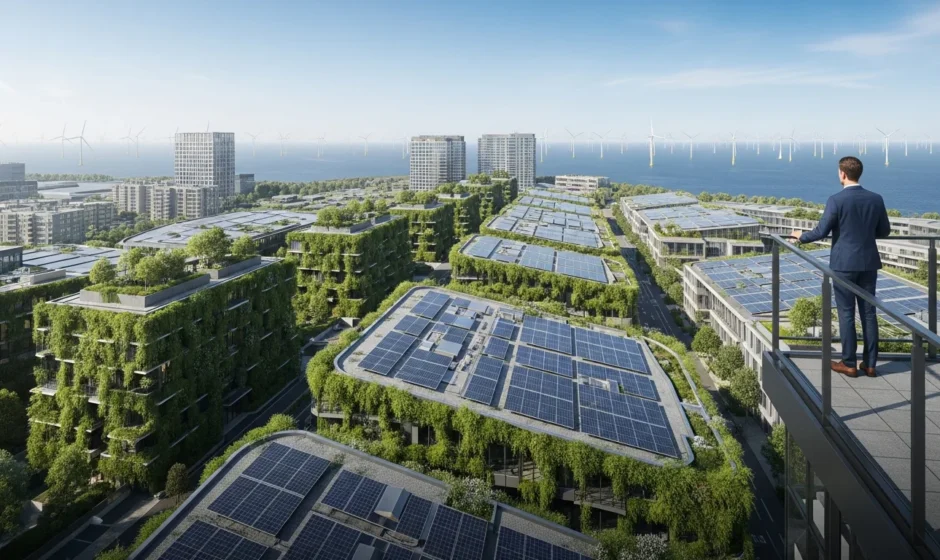

The Evolution of Sustainable Energy Solutions
As we navigate through 2026, the landscape of green technology innovations has shifted from niche experiments to the backbone of the global industrial complex. The urgency of climate targets has pushed engineers and scientists to develop systems that are not only cleaner but significantly more efficient than their fossil-fuel predecessors. This transition is no longer just about environmental stewardship; it is about economic survival and energy independence.
One of the most profound shifts has been in the decentralization of power. He who manages his own energy production today is the one who remains resilient against market volatility. Microgrids powered by advanced solar captures and localized wind turbines are becoming standard for both commercial hubs and residential complexes.
Next-Generation Battery Storage and Efficiency
The primary bottleneck for renewable energy has always been storage. However, recent breakthroughs in solid-state battery technology have revolutionized how we preserve power. These batteries offer higher energy density and faster charging times than traditional lithium-ion versions, making them safer and more durable for long-term use.
In the automotive sector, a lead engineer might focus his efforts on optimizing the thermal management systems of these batteries to ensure maximum range. By refining the chemical composition of the electrolytes, he can extend the lifespan of a vehicle’s power unit by nearly a decade, drastically reducing the environmental cost of battery replacement and disposal.
Integrating Intelligence into Urban Infrastructure
The modernization of our living spaces is another front where green tech is winning. By integrating advanced smart city technologies, municipalities are reducing waste in real-time. These systems use sensors to monitor traffic flow, air quality, and electricity consumption, adjusting outputs to meet demand without overextending resources.
For instance, smart street lighting only activates when sensors detect a pedestrian or vehicle, saving massive amounts of electricity across a metropolitan area. The architect of these systems ensures that his design prioritizes low-latency communication between devices to maintain safety while maximizing energy conservation.
Green Manufacturing and the Circular Economy
Manufacturing has long been a heavy contributor to global emissions, but new methods are changing the narrative. We are seeing incredible ways that 3d printing technology is reshaping manufacturing by enabling on-demand production that eliminates the need for massive inventory storage and long-distance shipping.
This additive manufacturing process allows a designer to use exactly the amount of material required for his component, leaving behind zero waste. Furthermore, the rise of bio-based polymers means that the materials being used are increasingly biodegradable or easily recyclable, supporting a truly circular economy where every byproduct becomes a new resource.
The Role of Artificial Intelligence in Resource Management
Artificial Intelligence (AI) acts as the brain behind modern green technology innovations. In 2026, AI algorithms are used to predict weather patterns with pinpoint accuracy, allowing grid operators to balance renewable input with precision. If a technician notices a dip in solar output, his AI-driven dashboard can automatically reroute stored power from a nearby hydro-facility to maintain stability.
Moreover, AI is optimizing the extraction of rare-earth minerals needed for green hardware. By using machine learning to analyze geological data, a mining specialist can identify the most efficient sites for extraction, minimizing the physical footprint of his operations and reducing the impact on the surrounding ecosystem.
Frequently Asked Questions
What is the most significant green technology innovation in 2026?
The most significant innovation is the commercialization of solid-state batteries, which provide higher safety and energy density for electric vehicles and grid storage compared to older technologies.
How does green tech impact the job market?
Green technology is creating a high demand for specialized engineers, data analysts, and technicians. A worker in this field must often update his skills to stay current with rapidly evolving hardware and software standards.
Can green technology help achieve net-zero emissions?
Yes, by combining high-efficiency renewable energy sources with intelligent grid management and carbon capture technologies, green tech provides the necessary tools to reach net-zero goals.
Is green technology more expensive than traditional technology?
While initial implementation costs can be higher, green technology typically offers a lower total cost of ownership due to reduced fuel needs, lower maintenance requirements, and government incentives.